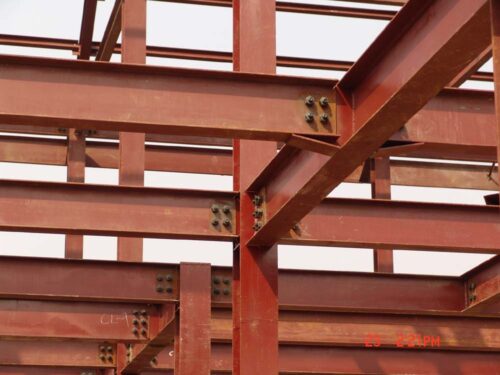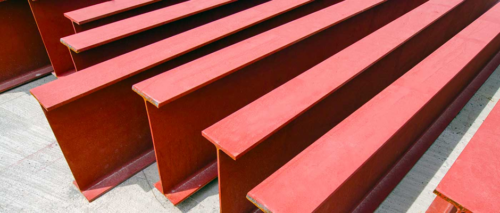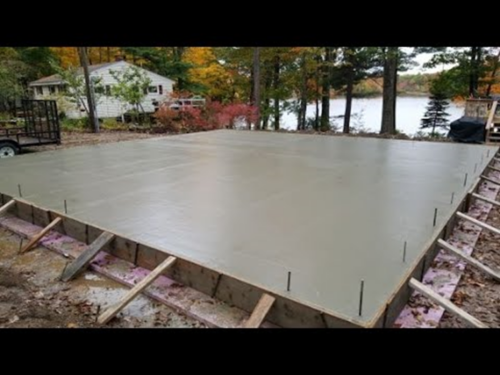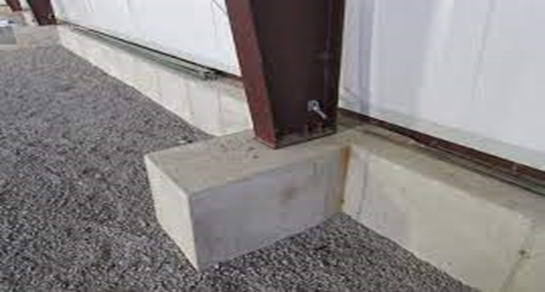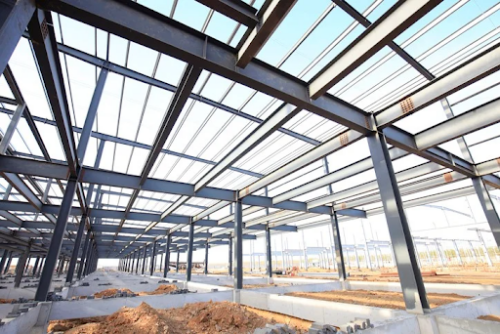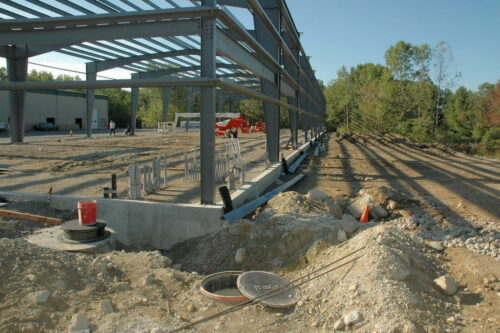

Most Trusted Metal Building Provider — Steel and Stud has delivered builds for thousands (and counting) of satisfied homeowners and businesses across the U.S. From custom carports and garages to full commercial steel structures, we offer metal building packages with concrete at competitive 2026 pricing.
⚡ Quick-Answer Box: 2026 Turnkey Cost Range
A metal building with concrete slab costs approximately $16.50–$45+ per square foot installed (turnkey), depending on size, location, and customizations. The building kit alone runs $10–$25/sq ft, while the concrete slab adds $4–$12/sq ft. Keep reading for size-specific pricing tables and a full cost breakdown.
Table of Contents
How Much Does a Metal Building with Concrete Cost in 2026?
The total cost of a metal building with a concrete slab depends on three main components: the building kit, the concrete foundation, and installation labor. In 2026, most property owners can expect to pay between $16.50 and $45+ per square foot for a fully installed (turnkey) metal building on a concrete slab.
But the cost per square foot can vary — be as low as $6 or as high as $120 — depending on steel prices, the size and design of your building, the options you choose, and the customizations you select.
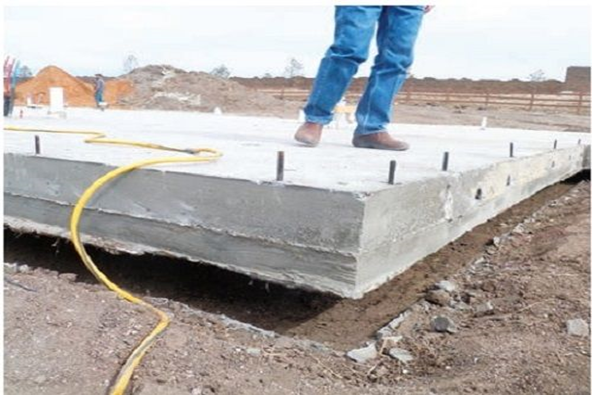
Just like any other structure, steel buildings require a proper concrete foundation. A concrete slab is ideal for a metal building because it provides a solid, stable base. It will help your building last longer and provide a cleaner surface upon which to erect your steel building.
Metal Building Kit Cost (Without Concrete)
The steel building kit itself typically costs between $10 and $25 per square foot in 2026. This includes the pre-engineered steel framing, wall panels, roof panels, and basic hardware.
Kit pricing varies based on steel market conditions, building complexity, gauge of steel, and accessories like doors and windows. Simple rectangular designs with low-pitch gable roofs are the most economical. For a quick reference, explore our 30×40 metal buildings or 40×60 metal buildings pages for size-specific kit pricing.
Concrete Slab Cost for Metal Buildings
The ballpark estimate for a metal building concrete slab foundation runs $4 to $12 per square foot in 2026, where owners typically spend between $5.35 and $6.17 per square foot — or roughly $113 to $126 per cubic yard — for both materials and installation.
Key factors that affect your concrete slab cost include:
- Slab thickness — A 4-inch slab costs about $2.83/sq ft for materials; a 6-inch slab runs approximately $3.57/sq ft
- Reinforcement — Wire mesh and rebar add durability but increase cost
- Vapor barrier — Polyethylene sheeting prevents moisture damage
- Edge thickening — Required for most metal building foundations to support wall loads
- Site conditions — Poor soil may require additional gravel base or compaction
- Labor rates — Vary significantly by region; DIY pours can save $1,600–$3,200+ on a typical slab
Adding extras like a vapor barrier, thicker edges, and wire mesh typically adds another $1.90 per square foot to your total (bringing material costs to $4.73–$5.47 per square foot).
Total Turnkey / Installed Price Breakdown
| Cost Component | Price Range (per sq ft) |
|---|---|
| Metal building kit | $10 – $25 |
| Concrete slab (materials + labor) | $4 – $12 |
| Delivery & shipping | $1 – $3 |
| Building erection / installation | $3 – $7 |
| Total Turnkey Installed | $16.50 – $45+ |
*Note: Prices reflect 2026 national averages based on current steel market conditions and our internal project records. Your actual cost will depend on location, building complexity, and local labor rates.
It may seem like pouring a slab is a simple process. In fact, some people decide to take on this task themselves to prepare their site for the erection of a steel structure. But the truth is that setting up a concrete slab is a technical process and needs experts who understand the texture of the ground and the nature of steel buildings. Only then is a concrete base created that can withstand the steel building in harsh weather and natural calamities like earthquakes, heavy snow, high wind, etc.
Steel and Stud has been in the prefab metal building kits business for a long time and ships buildings to homeowners, government agencies, and commercial customers almost daily. We know the industry and provide industry-quality products at the most reasonable rates for the concrete foundation of metal building kits.
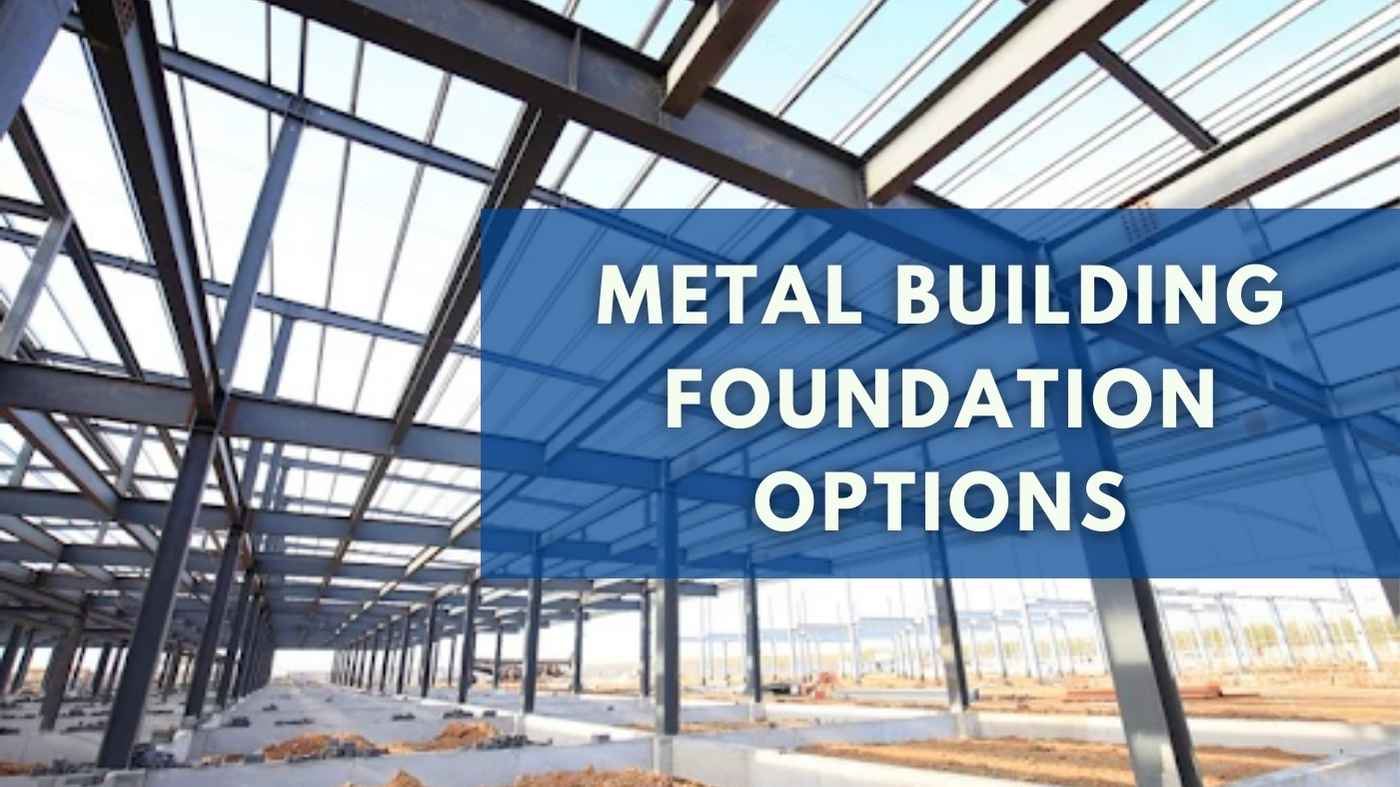
Best Foundation Types for Metal Buildings
Pre-engineered metal buildings typically use one of several foundation system
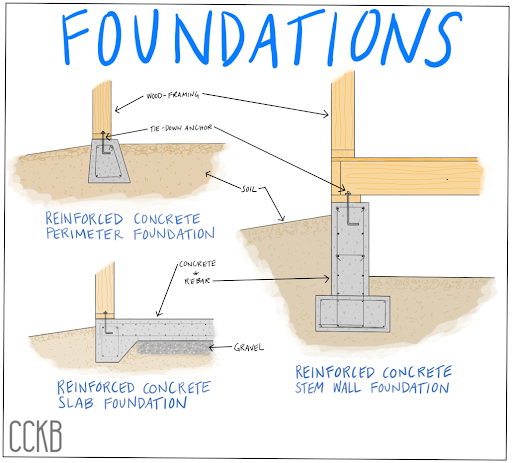
Choosing the best foundation for a metal building depends on your soil conditions, local building codes, climate, and whether you may need to relocate the structure in the future.
Let’s review the primary foundation types.
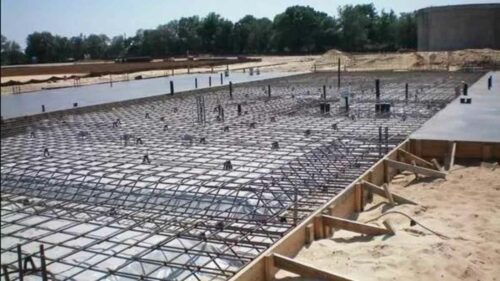
Concrete Slab Foundation (Slab-on-Grade)
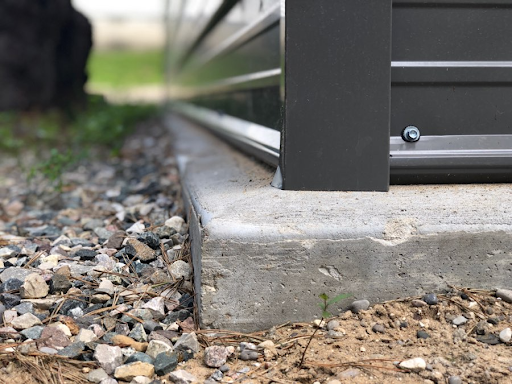
Often referred to as “floating slabs” or “floating foundations,” the average cost for a concrete slab-on-grade can be estimated at $6.60 per square foot depending on the slab’s size and thickness. A finished slab may measure anywhere from 3-1/2″ to 5-1/2″ in thickness.
It provides superior stability when the soil quality is poor.
Slab-on-grade is the most popular foundation choice for metal buildings because it delivers a flat, durable surface for equipment, vehicles, and foot traffic. It’s ideal for metal garages, workshops, and commercial steel buildings. See our 20×20 metal buildings and 20×30 metal buildings pages for small-building slab cost examples.
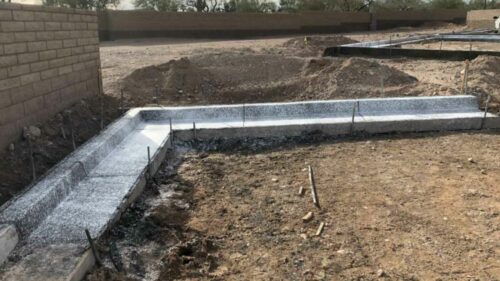
Perimeter / Curb Foundation
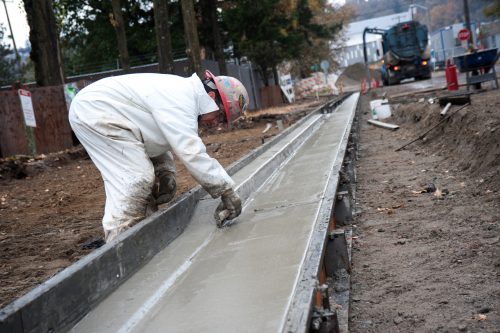
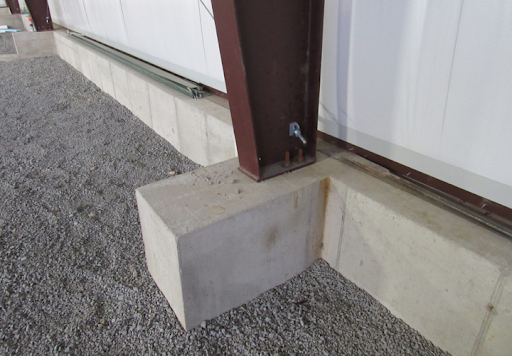
In this foundation, concrete is poured and reinforced around the perimeter where the structure will be installed. There is no concrete poured inside that perimeter. When construction starts on the main building, the walls are placed on the top of the curb. The footings are installed with the curb.
If there are weight-bearing walls within the structure, multiple curbs are included — these are called “ribbon” foundations.
This foundation type could be good for you if you want to install a crawl space. It helps reduce costs over traditional basement design. This foundation type is unsuitable for areas prone to moisture and mold because a crawl space can create pest problems in such weather conditions.
Floating Slab Foundation
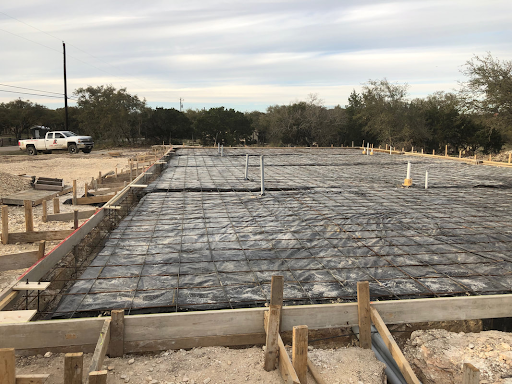
A Floating Slab Foundation is a hybrid between a traditional slab and a curb design. Construction commences with the installation of a curb foundation. The builders pour the slab within the established perimeters once the curb and footings are in place.
This foundation type is ideal when you want a slab foundation, but settling can result in damage. The hybrid design offers more “buffer” to the foundation that allows it to settle without compromising the structural integrity.
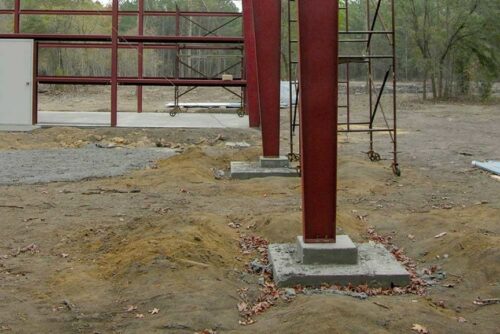
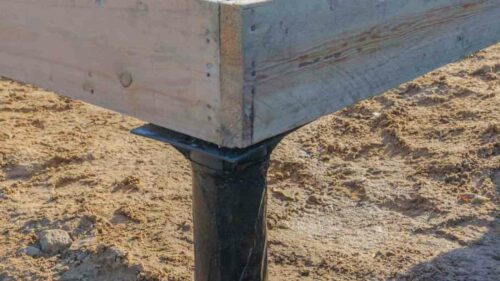
Pier Foundation
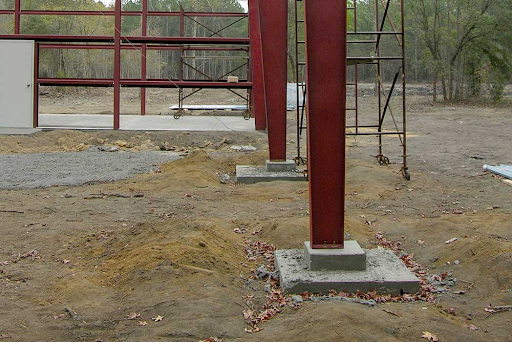
In this foundation, reinforced concrete piers are installed deep in the ground around the perimeter where the structure will be built. These piers support the building’s vertical load. Builders integrate a grade beam wall to counteract horizontal load stresses.
If your area has relatively dry, packed, stable soil and you’re concerned about wind uplift, this kind of foundation might be right for you. Apart from the agricultural sector, people also use pier foundations for various other structures in diverse industries.
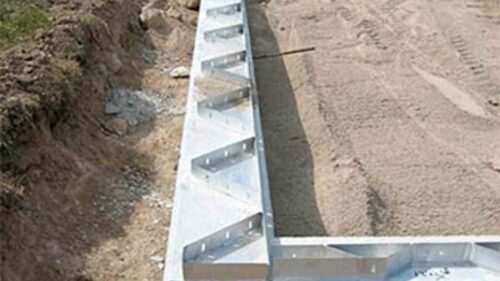
Portable Foundation
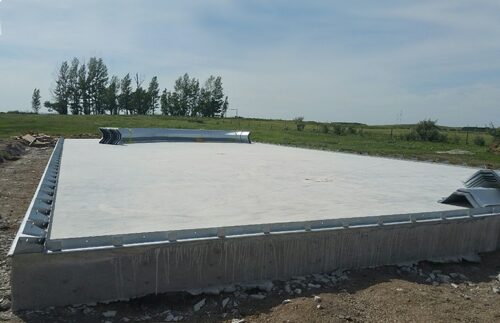
A portable foundation can be picked up and moved, just as its name suggests. If you are setting down a building that you may later expect to relocate — mainly if you do so frequently — then this foundation type is ideal for you. It also saves costs and can cut down on the time and labor required for installation.
Types of Metal Building Floor Bases
After choosing the right foundation for your building, you have to choose the right base for your steel building. Here are the prevalent steel building base options you have.
Ground Foundation
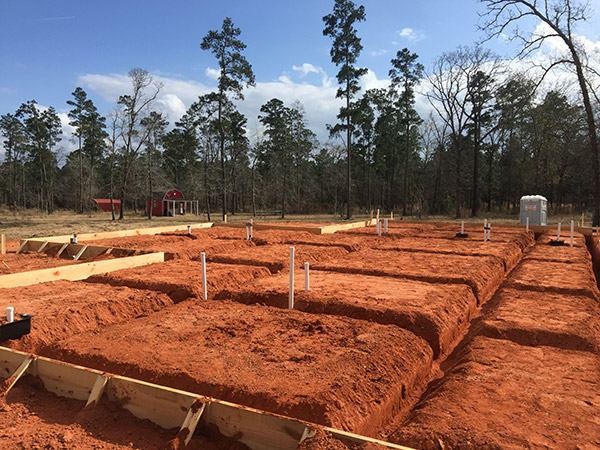
A ground foundation is nothing more than a leveled site, which is the most affordable option for a steel building foundation. It will be a ground-floor shed that you can use for agricultural purposes. Do not use it as a place to store something valuable that mud can spoil.
Concrete Foundation
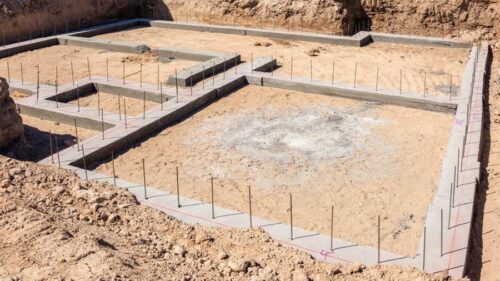
It is one of the best foundations as concrete floors provide a strong base that keeps your assets neat and intact. Dirt or gravel floors have too much mud, causing your valuables to suffer wear and tear. You can use this foundation for storage, parking, or recreational purposes.
Gravel Foundation
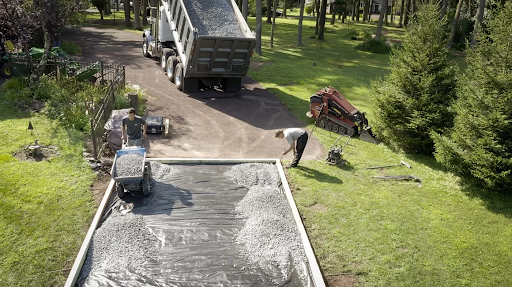
A gravel foundation is a good option if you are looking for a cost-effective way to make your steel building floor. To keep the floors uniform, you need to re-level them because gravel floors develop trenches over time. It is somewhere between the dirt and concrete foundation. Compared to the ground floor, you’ll get better firmness and cleanliness, but not as much as a concrete foundation.
Asphalt Foundation
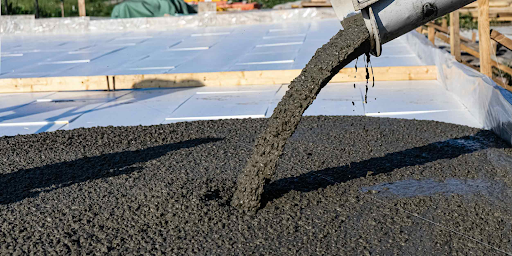
Asphalt foundations are suitable for areas with continuous damp grounds due to recurring rain. This foundation doesn’t wash away and delivers a firm floor to store your valuables or perform your functions. It is as fine as the concrete foundation but needs more maintenance.
Metal Building with Concrete Slab Cost by Size (2026 Price Table)
The table below shows estimated 2026 pricing for popular metal building sizes with a concrete slab included. These are turnkey ranges covering the building kit, concrete slab, and basic installation.
| Building Size | Sq Ft | Est. Building Kit Cost | Est. Slab Cost | Total Turnkey Range |
|---|---|---|---|---|
| 20×30 | 600 | $6,000 – $15,000 | $2,400 – $7,200 | $9,900 – $27,000 |
| 30×30 | 900 | $9,000 – $22,500 | $3,600 – $10,800 | $14,850 – $40,500 |
| 30×40 | 1,200 | $12,000 – $30,000 | $4,800 – $14,400 | $19,800 – $54,000 |
| 30×50 | 1,500 | $15,000 – $37,500 | $6,000 – $18,000 | $24,750 – $67,500 |
| 40×40 | 1,600 | $16,000 – $40,000 | $6,400 – $19,200 | $26,400 – $72,000 |
| 40×60 | 2,400 | $24,000 – $60,000 | $9,600 – $28,800 | $39,600 – $108,000 |
| 40×100 | 4,000 | $40,000 – $100,000 | $16,000 – $48,000 | $66,000 – $180,000 |
| 50×100 | 5,000 | $50,000 – $125,000 | $20,000 – $60,000 | $82,500 – $225,000 |
*Prices are 2026 estimates and vary by region, steel market conditions, and project complexity. Request a free quote from Steel and Stud for an accurate price.
Construction projects require a hefty amount of investment. Still, commercial metal building kits are less costly than many other construction options. But all the specifics should be lined up to estimate the final cost for your metal building.
The average cost to erect a commercial metal building usually ranges between $10 to $25 per square foot for the kit alone. But the cost per square foot can be as low as $6 or as high as $120, depending on steel prices, the size and design of your building, the options you choose, and the customizations you select. Fluctuating steel market prices, location, building complexity, weather conditions in your locality, and construction costs all impact the final price of your commercial metal building.
Size Matters with Commercial Metal Buildings
Depending on the building size, the number of windows and doors, the insulation used, electricity, plumbing, and HVAC, commercial metal building kit prices may range from $20,000 to more than $36,000 for mid-size structures. 40×40, 40×50, and 40×60 foot are some popular commercial building sizes that would cost under $20,000 for the kit. The cost for larger buildings is around and above $36,000.
For buildings of these sizes, you can expect to pay around the following for the building kit:
- 32×40 foot building: $20,000
- 40×60 foot building: $36,000
- 40×100 metal building: $67,000 to $78,000
- 50×100 foot building: $80,000–$90,000 on the West Coast and $70,000–$80,000 on the East Coast
Building height also affects cost. The taller the building, the higher the price. Favorable ceiling heights for most commercial buildings range from 20 to 40 feet.
*Remember: These are kit-only prices. Add your concrete slab cost ($4–$12/sq ft) and installation labor to calculate your total turnkey investment. Use the 2026 price table above for combined estimates.*
Windows and Doors Cost for Commercial Metal Buildings
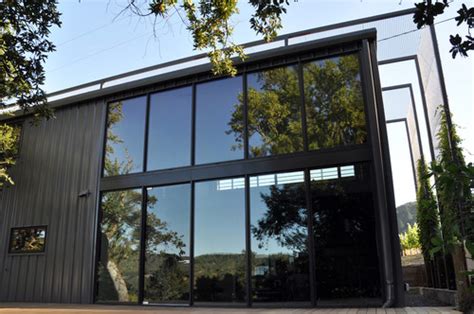
Windows and doors affect the building prices. The price will vary depending on what kind of door you have chosen for your building — whether they are hollow metal doors, galvanized doors, commercial steel doors, or metal roll-up doors. Hollow metal doors are the most reasonable choice.
The same goes for windows. Standard windows are most affordable for commercial steel buildings as they can be put anywhere. The price will vary if you choose from other options like metal-building-specific windows, single-hung, slim-line, and horizontal-side windows.
Insulating Your Metal Building
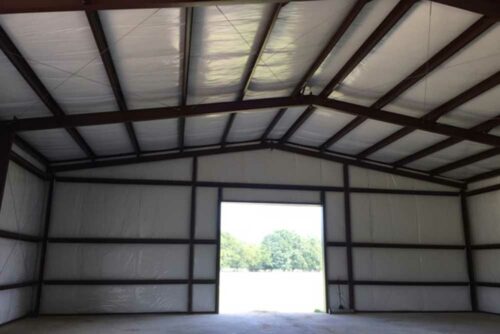
Insulating your metal building is necessary, and various insulation options are available for commercial steel buildings. The most popular insulation options are fiberglass, spray foam, double bubble, and prefabricated insulated panels. The cost of insulating the metal building will depend on what kind of insulation is suitable for your property and fits your budget.
The Average Cost of Pouring the Concrete Slab and Footers for Your Metal Building
Not all concrete slabs are the same. They typically vary in price depending on thickness and other features. You will likely spend less if you choose a thinner slab or complete the project yourself.
To pour a 20×20 concrete slab, the average cost of labor will vary between $1,600 and $3,200. You can cut labor from your total if you pour the foundation yourself.
The base cost for material is $3.57 per square foot for a six-inch slab. A four-inch slab costs about $2.83 per square foot.
According to this, the price of the concrete slab for a 60×100 steel building ranges from $16,980 to $21,420.
You may add extra features such as the vapor barrier, thicker edges, and wire mesh. These features add another $1.90 per square foot to your total ($4.73 to $5.47 per square foot).
Concrete Slab Cost Breakdown by Thickness (2026 Pricing)
| Slab Thickness | Material Cost per Sq Ft | With Extras (Vapor Barrier, Mesh, Thicker Edges) |
|---|---|---|
| 4-inch slab | ~$2.83 | ~$4.73 per sq ft |
| 6-inch slab | ~$3.57 | ~$5.47 per sq ft |
💡 Pro Tip: For metal buildings used to store heavy equipment—garbage trucks, RVs, farm machinery—opt for a 6-inch slab with 4,000-PSI concrete. The added upfront cost prevents costly cracking and repairs down the road.
Other Metal Building Construction Costs
Roofing Materials & Costs
There are various metal roofing materials available:
- Aluminum Shingles: Resistant to corrosion and saltwater damage, making them a good choice for buildings near the ocean. Additionally, they’re relatively inexpensive, costing approximately $3.15 to $6 per square foot.
- Copper Roofing: Extremely durable and lightweight and is also the most attractive choice for metal roof tiles. This roofing material costs range from $14 to $25 per square foot.
- Corrugated Metal: Not as durable as other materials but is one of the least expensive metal roofing materials. Price ranges between $1 and $2.50 per square foot.
- Standing Seam Panels: A type of roofing panel rather than a material. The panels will cost between $4 and $6.50 per square foot, depending on your chosen material.
- Steel Shingles and Tiles: Several common types of steel roofing exist, such as galvanized steel, galvalume, and stainless steel.
- Galvanized steel costs about $3.35 to $4.25 per square foot
- Stainless steel costs about $10 to $16 per square foot
- Zinc Panels: A high-quality metal roof that’s more durable than aluminum and more affordable than copper. Price ranges from $6 to $10 per square foot.
The cost of your metal building will depend on the roofing material you choose.
Permits & Engineering
Building permits and stamped engineering drawings are a cost many first-time buyers overlook. Here’s what to expect in 2026:
- Building permits: $500–$2,500+ depending on your county and building size
- Stamped engineering drawings: $1,000–$3,000 (required in most jurisdictions)
- Site survey or soil test: $300–$800
Every area has its own building codes with specific snow, wind, and seismic load requirements. Contact your local building department early in the planning process to avoid costly surprises. Steel and Stud can provide engineered drawings that meet your local code requirements—just ask when you request your quote.
Step-by-Step Concrete Slab Installation Process for Metal Buildings
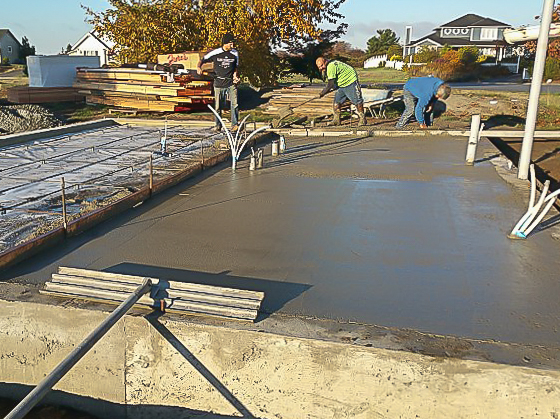
Proper slab installation is critical for the long-term performance of your metal building. Follow these steps—or share them with your concrete contractor—to ensure your foundation meets metal building specifications.
1. Site Clearing & Preparation
Clearing the site is the first step. When you remove large stumps, remove the root debris and fill the hole compactly to avoid cracking.
It is always helpful to check with your local building department about permit requirements and to call 811 so that utility companies can mark the buried wires and pipes before you dig.
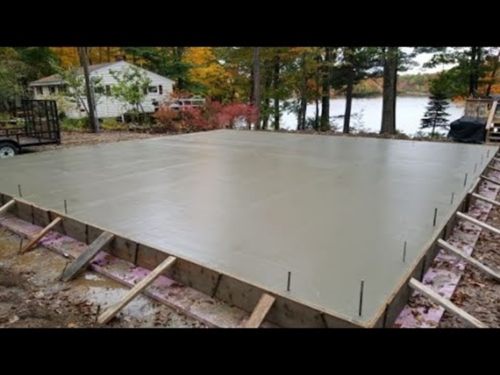
2. Formwork Construction
Use straight boards of size 2×12 for each side of the slab. You can also nail a 4′ section of 2×12 over the joint if you don’t have enough boards to span the whole slab.
Use batter boards, also known as stakes and kickers, to help stabilize the foundation form around the outside perimeter of the trench.
3. Gravel Base & Compaction
Creating a firm base is crucial to help prevent cracking, and unless you have sandy soil, you should lay crushed stone or a layer of gravel to aid drainage under the slab.
Take the advice of your local concrete supplier on what you should put down under the concrete. Solid foundations with good drainage are essential for preventing cracks.
4. Vapor Barrier Installation
Lay down a vapor barrier (polyethylene sheeting) along with a conduit under the concrete floor. It prevents water vapor from condensing on walls, ceilings, attics, crawlspaces, or roofs, where it can grow mold or cause building materials to rot.
5. Rebar & Wire Mesh Reinforcement
A reinforcing bar is a critical piece in the foundation plan and should be designed by a professional. Ensure you investigate the local building code for the depth of the footing along with any other foundation requirements.
For most metal building slabs, #4 rebar placed on 12-inch centers in both directions is standard. Wire mesh (6×6 W2.9×W2.9) adds additional crack resistance across the slab surface. Your building’s engineered drawings will specify the exact reinforcement schedule required.
6. Plumbing & Electrical Conduit Rough-In
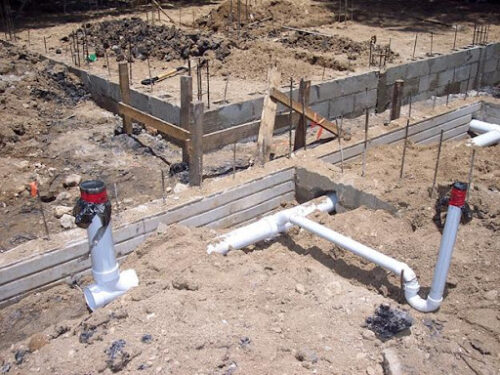
Install the PVC piping for the pipe to run through so it would be close to the sidewall. Hire an experienced professional to avoid plumbing and electric mistakes rather than trying to do it yourself.
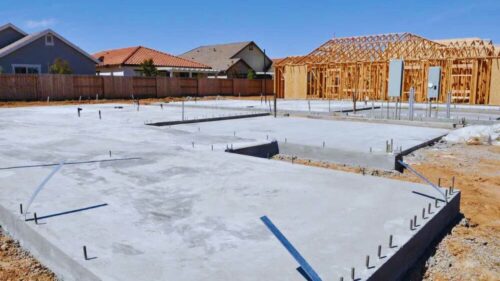
7. Anchor Bolt Placement
Anchor bolt placement is one of the most critical steps for a metal building slab—and one of the most commonly botched. Your metal building manufacturer will provide an anchor bolt plan showing exact locations, spacing, and bolt sizes.
- J-bolts are the most common type used for metal buildings
- Typical spacing is every 4 to 6 feet around the perimeter
- Bolts must be set to the correct height and alignment before the concrete sets
- Double-check every bolt location against your building’s engineered drawings
⚠️ Important: Misplaced anchor bolts can delay your entire project. Template the bolt locations using your building plans and verify measurements before the pour.
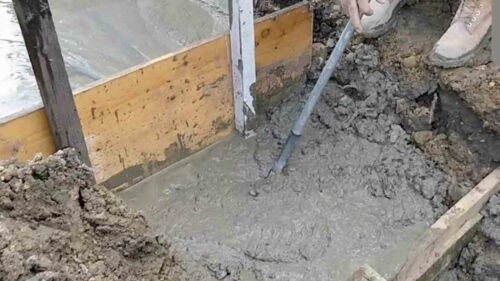
8. Concrete Pouring & Finishing
Use expansion joints to separate the slab into sections to allow for movement and prevent frost heave.
Once all the above steps are completed, pour the concrete slab with finishing.
Work the surface with a bull float and then a steel trowel for a smooth finish, or use a broom finish for better traction in garages and workshops.
9. Curing & Timeline
Let the slab cure for about 28–30 days, and the concrete will be ready to start erecting the building.
During the curing period, keep the slab moist for at least the first 7 days to achieve maximum strength. Avoid placing heavy loads or beginning metal building erection until the full cure time has passed.
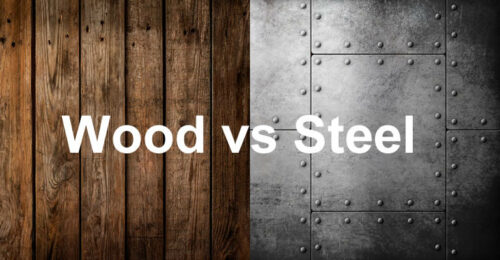
Is It Cheaper to Build with Steel or Wood? (Steel vs. Concrete vs. Pole Barn)
This is one of the most common questions we hear. Here’s how the main building methods compare in 2026:
| Factor | Metal Building with Slab | Wood-Frame Building | Pole Barn |
|---|---|---|---|
| Cost per Sq Ft (Turnkey) | $16.50–$45+ | $100–$200+ | $15–$35 |
| Construction Speed | 2–6 weeks after slab cures | 3–6 months | 2–4 weeks |
| Durability | 30–50+ years, minimal maintenance | 20–40 years with regular maintenance | 20–30 years |
| Termite/Pest Resistance | Excellent | Poor without treatment | Moderate |
| Insurance Costs | Typically lower | Higher | Moderate |
| Resale Value | Strong | Strong | Moderate |
| Customization | High (clear-span interiors) | High | Limited |
Bottom line: Metal buildings with concrete slabs offer the best long-term value for most property owners. Pole barns can be cheaper upfront but lack the durability and finished look of steel. Wood-frame construction costs significantly more per square foot and requires ongoing maintenance.
If you’re wondering, “Is it cheaper to build a pole barn or buy a metal building?”—the answer depends on your use case. For a simple agricultural shelter, a pole barn may save you money. For a garage, workshop, commercial space, or any building you want to last decades with minimal upkeep, a metal building with a concrete slab is the smarter investment.
Tips on How to Save Money on Your Metal Building with Concrete Slab
To save money on steel buildings with concrete slabs, you can take care of the following things:
Slab sizing:
- When constructing a slab, you should make it the same width as your building but two inches longer. If your building is 15 feet wide × 25 feet long, then your slab should be 15 feet wide × 25 feet 2 inches long.
Slab thickness:
- The minimum thickness of your concrete slabs should be four inches. Steel buildings that are used to store heavy equipment such as garbage trucks, recreational vehicles, and so forth require a minimum of five to six inches deep concrete slabs. Using 4,000-PSI concrete is also recommended in these cases.
Expansion joints:
- Concrete can withstand friction, so cut the expansion joints in the slab. It is recommended that you complete sawing within six to eighteen hours after pouring concrete if possible; waiting more than 24 hours may cause cracks to form in your slab.
Footing requirements:
- Pour the perimeter footings simultaneously with the slab. In addition, perimeter footings should be at least 12″ deep and 12″ wide. If you work with a frost line, you might need to consider deeper perimeter footing. Remember that you can include your slab’s four inches thickness as part of 12 inches of depth. Study your local building codes for other sizing requirements, as you might also need rebar along the top and bottom.
Setting your slab and building location:
- Property line and setbacks – To ensure that you don’t unintentionally plan to construct on a space that falls outside of your property line, you will need to consult the plat map for your property. Additionally, most jurisdictions require that steel buildings have a setback of a certain distance from that property line. All these details will be given to you as part of the building permit process.
- Grade or water control – You will need to have the land regraded if your building is installed at the bottom of a hill so that rainwater flows away from the building. Install your metal building on higher ground, if possible.
- Accessibility to your building – As you now know what you will use your structure for and what size it would be, you will need to consider where and how people can have easy access to the building. Make sure that the entry point to the building is straight-on and that there is no landscaping in the way. Further, ensure that your facility is reasonably close to a main electrical supply.
Additional money-saving tips for 2026:
- Compare at least 3 quotes from different concrete contractors and metal building suppliers before committing
- Choose standard building sizes (like 30×40, 40×60, or 50×100) to avoid custom engineering fees
- Handle site prep yourself if you have the equipment—clearing, grading, and gravel placement are tasks many property owners can DIY
- Order during the off-season (late fall and winter) when concrete contractors and building suppliers are less busy and may offer better pricing
- Bundle your building kit and concrete package through a single provider like Steel and Stud to simplify coordination and potentially save on overall costs
How to Calculate Your Metal Building Construction Costs
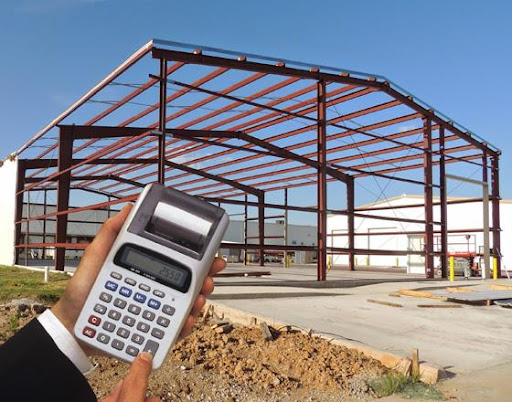
Many variables determine how much a metal building costs. Consider these few things before asking for a quotation for your general steel building:
Building Use & Design: Determine the end use for your building. Do you want tapered columns, straight walls, modular framing, or clear span? Furthermore, how complicated is your design? The most economical structures are simple rectangular-shaped structures. Also, you will find a low-pitched gable roof costs less.
Local Building Codes: Every area has its own building codes depending on its geographical conditions. Each area’s codes have specific snow, wind, and seismic loads required for the building.
Building Dimensions: Decide the building width, length, and height you want. When planning, remember that measurement of the steel buildings is done by the out-to-out dimensions of the steel framing. Also, metal building companies base their building heights on how tall the eaves are.
Accessories & Add-Ons: Do you intend to add gutters, a mezzanine second-floor system, vents, insulation, reflective roof panels, or other add-ons? On average, customers spend about 15%–20% of the price of their basic kit on additional accessories.
Shipping & Delivery: Steel building kits are shipped to job sites by truck from the nearest factory, which means that shipping costs are included in a detailed quote.
Doors & Openings: How many doorway openings do you want in your building? Steel building personnel doors and various overhead and hangar doors are available at Steel and Stud.
After determining all the points mentioned above and having a clear idea of what you want, go to your supplier and ask them for a quotation. Steel buildings cost around $12–$25 per sq ft for the building kit components (add $4–$12 per sq ft for the concrete slab to estimate your total turnkey cost)
Quick Cost Formula
Here’s a simple way to ballpark your total project cost:
> Total Turnkey Cost = (Building Sq Ft × $10–$25) + (Slab Sq Ft × $4–$12) + Accessories (15–20% of kit price) + Permits ($500–$2,500)
Example: A 40×60 metal building (2,400 sq ft):
- Building kit: 2,400 × $15 = $36,000
- Concrete slab: 2,400 × $6.60 = $15,840
- Accessories (15%): $5,400
- Permits: $1,500
- Estimated total: ~$58,740
Want an exact quote? Contact Steel and Stud for a free, no-obligation estimate tailored to your building size, location, and specifications.
Choosing the right supplier and building partner is of utmost priority. Steel and Stud is the most reliable supplier in the USA. They provide high-quality supplies at the most affordable rate.
Why Choose Steel and Stud for Your Metal Building with Concrete
Steel and Stud has been in the prefab metal building kits business for years, delivering buildings to homeowners, government agencies, and commercial customers across the country. Here’s what sets us apart:
- Thousands of buildings delivered to satisfied customers nationwide
- Competitive pricing with transparent, no-hidden-fee quotes
- Custom design support for any size from a 20×20 workshop to a 100×200 commercial facility
- Concrete package coordination so your slab and building work together seamlessly
- Engineered drawings included to meet your local building codes
- Nationwide delivery from strategically located factories to minimize shipping costs
Whether you need a 20×30 metal garage, a 40×60 workshop, or a 50×100 commercial building with a concrete slab, we can help you design, price, and deliver the right solution.
🚀 Ready to get started? Request a free quote from Steel and Stud and get 2026 pricing for your metal building with concrete package.
Choosing the Best Steel Building
To choose the best steel building, you must focus on your needs. Decide whether you are constructing a metal structure for residential or commercial purposes, as this is the most important factor that will help you decide on other building features.
Here are a few popular sizes to explore based on common use cases:
- Small garage or workshop: 20×30 or 24×32
- Two-car garage or hobby shop: 30×40 or 30×50
- Large workshop or small commercial: 40×60 or 40×50
- Agricultural or warehouse: 50×100 or 80×100
- Large commercial or industrial: 100×100 or 100×200
You should first outline your requirements—building size, intended use, local weather conditions, and budget. From there, you can determine the right foundation type, insulation, roofing, and accessories.
Frequently Asked Questions
How much does a 30×40 metal building with a concrete slab cost?
A 30×40 metal building with a concrete slab typically costs between $19,800 and $54,000 in 2026, depending on slab thickness, building features, and your location. The building kit alone runs $12,000–$30,000, while the concrete slab adds $4,800–$14,400.
What is the best foundation for a metal building?
A concrete slab-on-grade is the best foundation for most metal buildings. It provides a level, durable surface that supports the building’s weight, resists moisture, and anchors the structure against wind uplift. For areas with poor soil or frost concerns, pier foundations or floating slabs may be more appropriate.
How much should a 40×60 concrete slab cost?
A 40×60 concrete slab (2,400 sq ft) typically costs between $9,600 and $28,800 in 2026, depending on thickness (4-inch vs. 6-inch), reinforcement, and local labor rates. The national average falls around $6.60 per square foot for a standard 4-inch slab with basic reinforcement.
Is it cheaper to build with concrete or steel?
Steel buildings are generally less expensive than poured concrete or concrete block construction. A metal building with a concrete slab costs $16.50–$45+ per square foot turnkey, while concrete block construction typically runs $100–$200+ per square foot. Steel also goes up faster, reducing labor costs.
What is poor man's concrete?
“Poor man’s concrete” typically refers to a mixture of cement and dirt (sometimes called “soil cement” or “dirt cement”) used as a low-cost alternative to traditional concrete. While it can work for simple pathways or temporary pads, it is not recommended as a foundation for metal buildings. A proper concrete slab with reinforcement is essential for structural integrity and warranty compliance.
How long does a concrete slab need to cure before erecting a metal building?
Concrete should cure for a minimum of 28–30 days before you begin erecting your metal building. During the first 7 days, keep the slab moist to achieve optimal strength. Rushing this timeline can lead to cracking and foundation problems.
Can I pour my own concrete slab for a metal building?
Yes, but it’s not recommended unless you have experience with concrete work. Anchor bolt placement, proper reinforcement, and achieving a level surface are critical for metal building installation. A misaligned slab can cause major problems during erection. Most property owners save money in the long run by hiring a professional concrete contractor.